S Corp Distributions Wages before any other cash.
Steven Palmieri fills the Tax CFO role and the Entrepreneur's CFO role, with wages set ahead of any other cash.
Name the cashWhich line is blank.
Name the line. Leave the figures out.

You will be talking to the Steven Palmieri practice.
The Tax CFO way with a cash name.
A bookkeeper records the transfer that already cleared. The Tax CFO decides which name that cash wears before the next payroll runs.
Wages come first.
Pay for the work is the first name the cash can wear.
Click to read why wages come first ›Tap to read why wages come first ›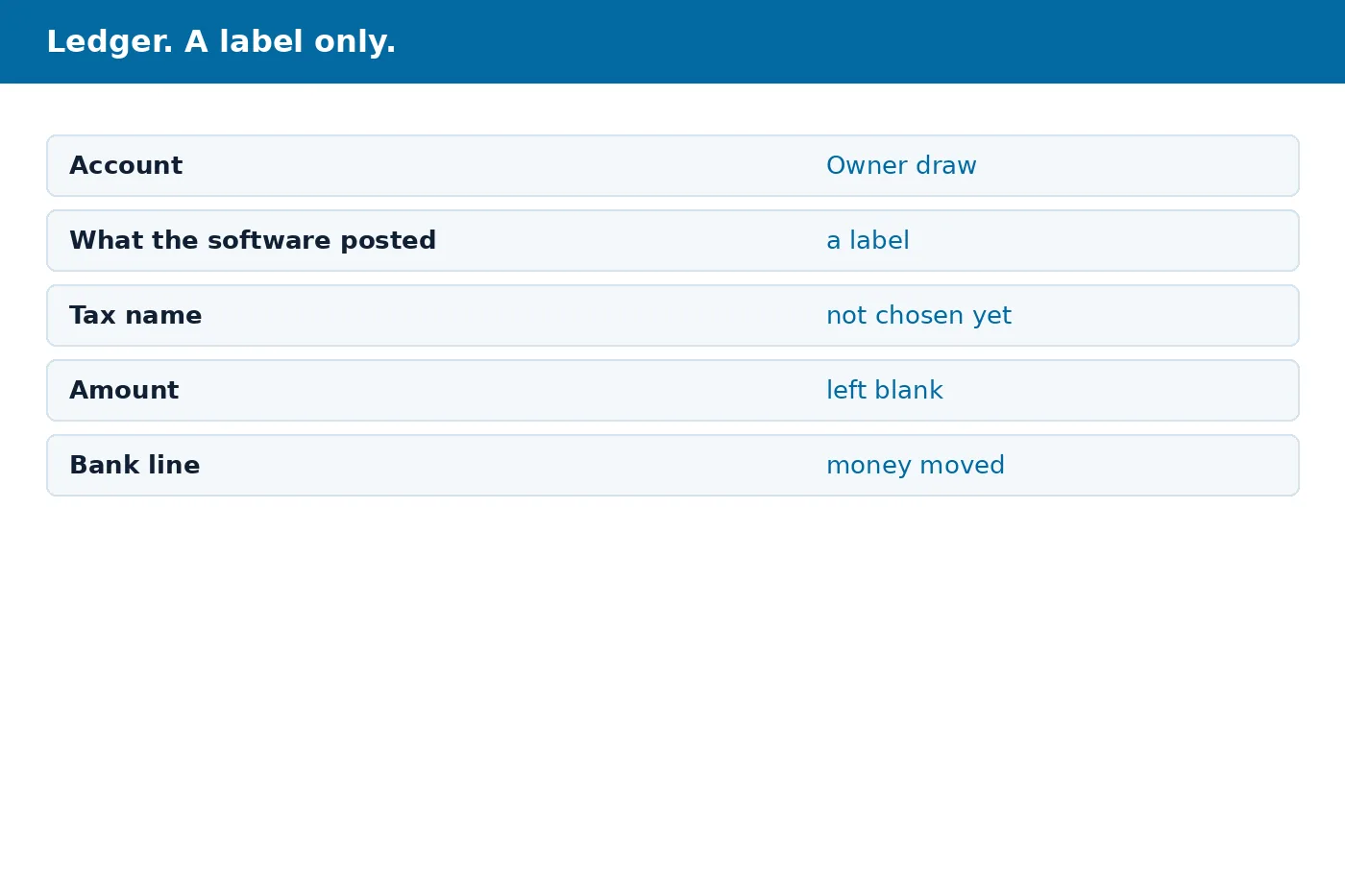
A draw is a label.
The software can call a transfer an owner draw. That is a label, not a conclusion.
Click to read the draw label ›Tap to read the draw label ›A loan needs paper.
A loan has a note, interest, and a real plan to pay it back.
Click to read what a loan needs ›Tap to read what a loan needs ›No split of profit.
We will not print a percentage and call it the wage.
Click to read the refusal ›Tap to read the refusal ›Basis is the ceiling.
Cash that is not wages can leave free of a second tax only while basis remains.
Click to read the ceiling ›Tap to read the ceiling ›Premiums on the wage.
Health coverage for an owner over two percent belongs on the wage line.
Click to read the premium rule ›Tap to read the premium rule ›Six names the cash might wear.
Open one card. Each names the question we ask, and the fact that keeps a label from becoming a story.
1Wages were thin and the transfer was large
We ask what work the owner actually did
Pay for services comes before cash that is not pay. A thin wage beside a large transfer is the first question.
2The software calls the transfer an owner draw
We treat those words as a label only
A label in the books is not yet wages, a distribution, or a loan. The bank only shows that money moved.
3Someone called the transfer a loan
We ask to see the note
A loan has paper, a rate, and a plan to pay it back. Without those, the cash still needs another name.
4A percentage was offered as the whole answer
We will not print a split
No fixed share of profit is a wage. The wage follows the work, and the rest waits until basis is known.
5Profit showed on the return and the bank stayed quiet
We keep the K-1 and the bank apart
Profit can land in a year the owner took no cash. Cash can move in a year the profit is small.
6The company paid the owner's health coverage
We put those premiums on the wage statement
When an owner holds more than two percent, those premiums belong on the wage line. We do not invent a shortcut beside it.
Leave the line you cannot name. A reply says what has to be true before that cash has a final name.
Send the line you cannot name.
One line is enough. Figures can wait for a signed letter.
You will be talking to the Steven Palmieri practice.
Three names, in that order
We keep the books, set up payroll, and prepare the return so wages come before any other cash.
The wage is pay for work. Cash that is not pay waits until basis still allows it. A loan is a third name, and only when the paper exists.
Bring the line that is still blank. We will say which name it can wear, and which name it cannot.
An owner takes money from the company and then has to say what the money was. There are three honest names. The first is wages, and wages are pay for services the owner actually performed. The second is cash that is not pay, which can leave only as far as basis still allows. The third is a loan, and a loan is not a mood. A loan has a note, a rate of interest, and a plan to pay the company back.
The bank record shows that money moved. It does not choose the name. Bookkeeping software will offer a word, often owner draw, and that word is a shelf label. We keep the label only until the facts pick a better one. If the facts are thin, the name stays temporary and the return does not pretend otherwise.
Profit on the return and cash in the bank are different events. Profit can land in a year the owner took no cash. Cash can move in a year the profit is small. We keep those two stories apart so a quiet bank balance is not treated as proof that nothing was earned, and a busy bank account is not treated as proof of profit.
What we actually do
We keep the books so a month can close. A month is finished only after deposits, card charges, and loan balances have been tied to the ledger. The categories stay in the same places, which lets two months sit side by side. A statement comes after that tie-out. The statement shows a month that has stopped moving.
We set up payroll so the wage is a real wage. The company uses a payroll provider, the one it already has or one it chooses, and that provider runs payday. We do not run payday. We do set the wage, the deposit rhythm, and the year-end wage statements so the wage line matches the work.
We prepare the return from a month that has closed. The past gets the cash named correctly. The present gets a close the owner can read. The months ahead get a wage that still matches the duties, the time, and the training, not a split somebody hopes will be safe.
No client's file is retold here. No sample dollar is offered. When a paragraph in the instructions needs a fresh reading, that paragraph stays off the page instead of being guessed.
Who should leave this page
Leave if you want a printed ratio of profit to pay. We will not produce one. Leave if you want a firm to sign an audit, a review, or a compilation. That engagement belongs with a firm allowed to sign it, and we say so on the first call. Leave if you want us to run payday. Payday stays with the payroll provider.
Stay if you want the books kept, payroll set up, and the return prepared with the three names kept apart. Stay if a notice arrived and you want the wage compared with the work, not with a rumor about what percentage is usual. Stay if the software has used one label all year and you suspect the label is only a label.
A shop, a notice, a receipt, and a filing date that is the same in every state are enough setting. We do not need a skyline to talk about cash. The work is the same wherever the owner sits when the call starts.
A month that can be filed
A month that can support a return is a dull month. The deposits match. The wage statements match the work. The cash that was not pay has one name, and the basis worksheet still has room for that name, or it does not and we say so. Form 7203 is the federal worksheet for that ceiling. We use it as a worksheet. We do not turn it into a lecture about line numbers.
Health coverage is one of the items that surprises people. When the owner holds more than two percent, premiums the company paid belong on the wage line. We put them there. We do not park them in a side account and hope the wage statement can ignore them.
October is early enough to make a thin wage true, with the payroll provider the company already uses, before the year closes. Once the return is the project, the paydays for that year have already passed. The useful plan is a wage payroll already paid while the year was open.