S Corp Distributions Premiums belong on wages.
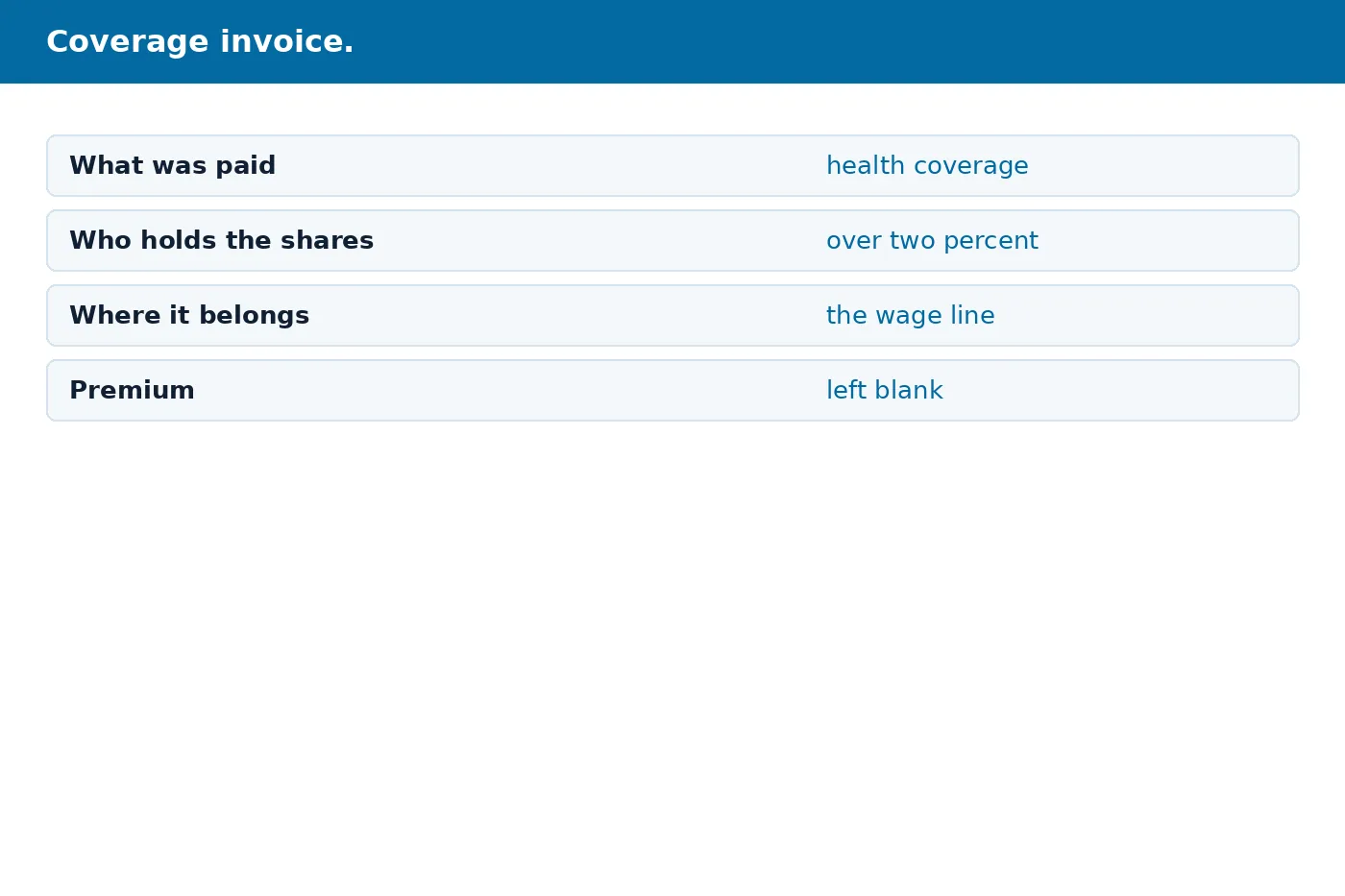
Health coverage the company pays for an owner who holds more than two percent belongs on the wage line.
Premiums ride on the wage line.
When an owner holds more than two percent of the company, health premiums the company pays for that owner belong on the wage statement. We spell the holding out on purpose. The rule is about that ownership, not about a vibe that the owner is important. If the holding is over that line, the premiums are wages for this purpose. We put them on the wage line.
The practical effect is boring and good. Payroll shows the premiums. The wage statement shows the premiums. The books and the return are telling the same story. Leaving the premiums in a benefits account and off the wage statement splits the story. We do not do that to make a report look smaller.
We do not invent a premium amount on this page, and we do not quote a national total for how often owners miss this. Your invoices from the coverage are your facts. A receipt is enough to start. The dollar can wait for the engagement.
What setup has to include.
Payroll setup has to know about the premiums before year-end statements are produced. Telling the provider in October is early enough in an ordinary year. Telling the provider after the statements are locked is a correction project, not a setup. We would rather be in the first case. If we are in the second, we say what can still be fixed and what has to be disclosed as a miss.
The owner still has wages for the work, separate from the premiums. Premiums do not replace pay for duties. A company that pays coverage and pays almost no wage has not finished the wage question. Both belong on the wage statement when both are true. Coverage alone is not a salary.
We set this up with the payroll provider the company already uses. We do not become the provider. Payday, deposits, and the machinery of withholding stay there. Our work is to make sure the items that belong on the wage are on the wage.
What this page will not add.
We will not add a second rule that we have not re-read for the year in front of us. Instructions change in small ways. A public page that piles every adjacent credit and exclusion into one cheerful list will be wrong in a way that is hard to see. The premium belongs on the wage line. That is the sentence we are willing to stand on here.
We will not use a client's coverage as an illustration. A made-up shop can have coverage in the abstract. It cannot have a plan name, a price, or a family status borrowed from a real file.
The wage question itself is on the wage page. The timing is on the October page. The fit, if you wanted a ratio instead, is on who this is not for.
Ask about the premium.
Say who paid. Leave the price off this form.

You will be talking to the Steven Palmieri practice.