S Corp Distributions Wages before any other cash.
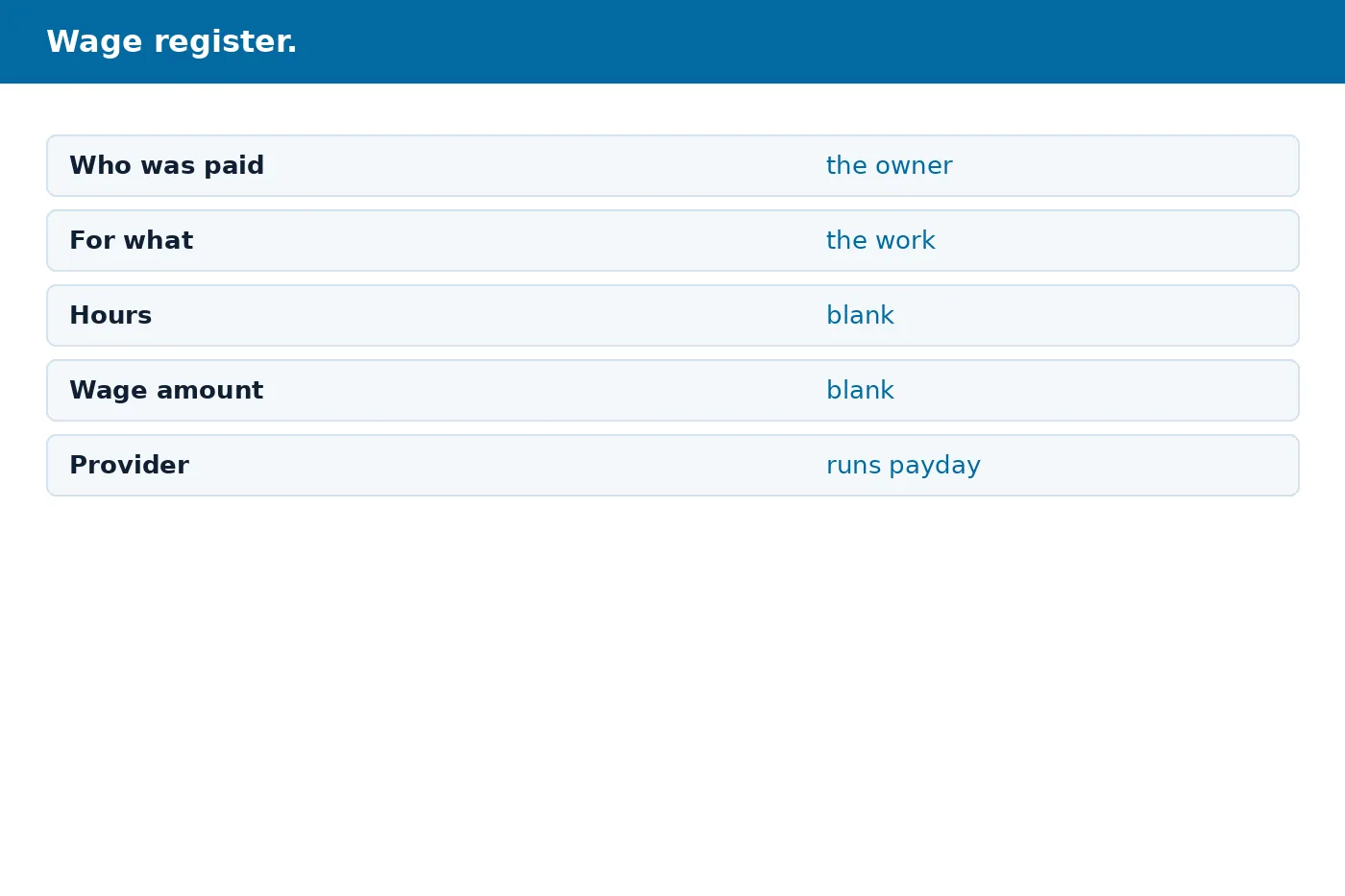
The first name for cash an owner takes is wages, and wages are pay for work the owner did.
Pay follows the work.
Wages are pay for services. The services are whatever the owner actually did for the company that year. Duties, time, training, and what a similar role is paid somewhere else are the facts we write down. A percentage of profit is not one of those facts. We will not print one, even when someone on a forum treats a famous split as if it were a rule.
The comparison is ordinary. If the owner runs the counter, orders the stock, and answers for the bills, that is a job. The wage should look like pay for that job. If the owner stopped doing the job and the cash kept moving, the cash needs a different name. The name is not a moral judgment. The return can use only the word the facts support.
We keep the books so the job and the cash can be seen at the same time. A closed month shows what was paid through payroll and what left some other way. Those two columns are the start of the conversation. They are not yet a tax answer, and they are not a sample from anyone else's shop.
The provider keeps payday.
The company needs a payroll provider if it is going to pay a wage. Many owners already have one. We set the wage up inside that setup. The provider calculates the withholding, makes the deposits, and produces the wage statement. We do not take payday away from that provider, and we do not call ourselves the payroll department.
Setup still matters. A wage that exists only as a journal entry at the end of the year is a story. A wage that ran through payroll, on a rhythm the owner can point to, is pay. When we prepare the return, we want the second one. If the year still has months left, October is early enough to start or to correct the wage with the provider already in place.
Year-end wage statements should match what payroll actually paid, including health premiums when the owner holds more than two percent. That match belongs in setup and again on the return. There is one ledger, not a shadow ledger beside it.
A shop day, with no figures.
Picture a shop that sells ordinary goods. The owner opens, sells, reorders, and locks up. On some days the owner also moves cash from the company account to a personal account. The work of opening and selling is the wage question. The transfer is a separate question. Putting both events on one line because they happened on one date makes the return harder, not easier.
A receipt from that shop is just a receipt. It shows a sale or a purchase. It does not decide what the owner may take. We use the receipt, the payroll records, and the bank activity as three piles. The piles stay separate until each one has a name.
A notice, if one arrives, usually asks whether the wage was pay for the work. We answer from the duties and the time. We do not answer with a ratio, and we do not invent a dollar to make the notice go away. If the wage was thin for the work, the honest reply may be that the wage should have been higher, and that the correction belongs in payroll while the year is still open.
Which names the return can carry.
The return can say that wages were paid, because payroll paid them. The return can say that other cash left, because the bank shows it and basis still had room. The return should not say that a journal entry was wages. It should not say that a draw label was a distribution if basis was never measured. It should not say that a transfer was a loan if no note exists.
Only a set of books that has already closed can feed that return. A month that is still moving gets named as still moving, and the return waits. Categories in an open month can still shift, and a return built on them would shift too.
Read how a draw label stays a label, why we will not print a split, and when October is early enough to make the wage true.
Ask about the wage line.
Tell us the work. Leave the dollars for a signed letter.

You will be talking to the Steven Palmieri practice.